
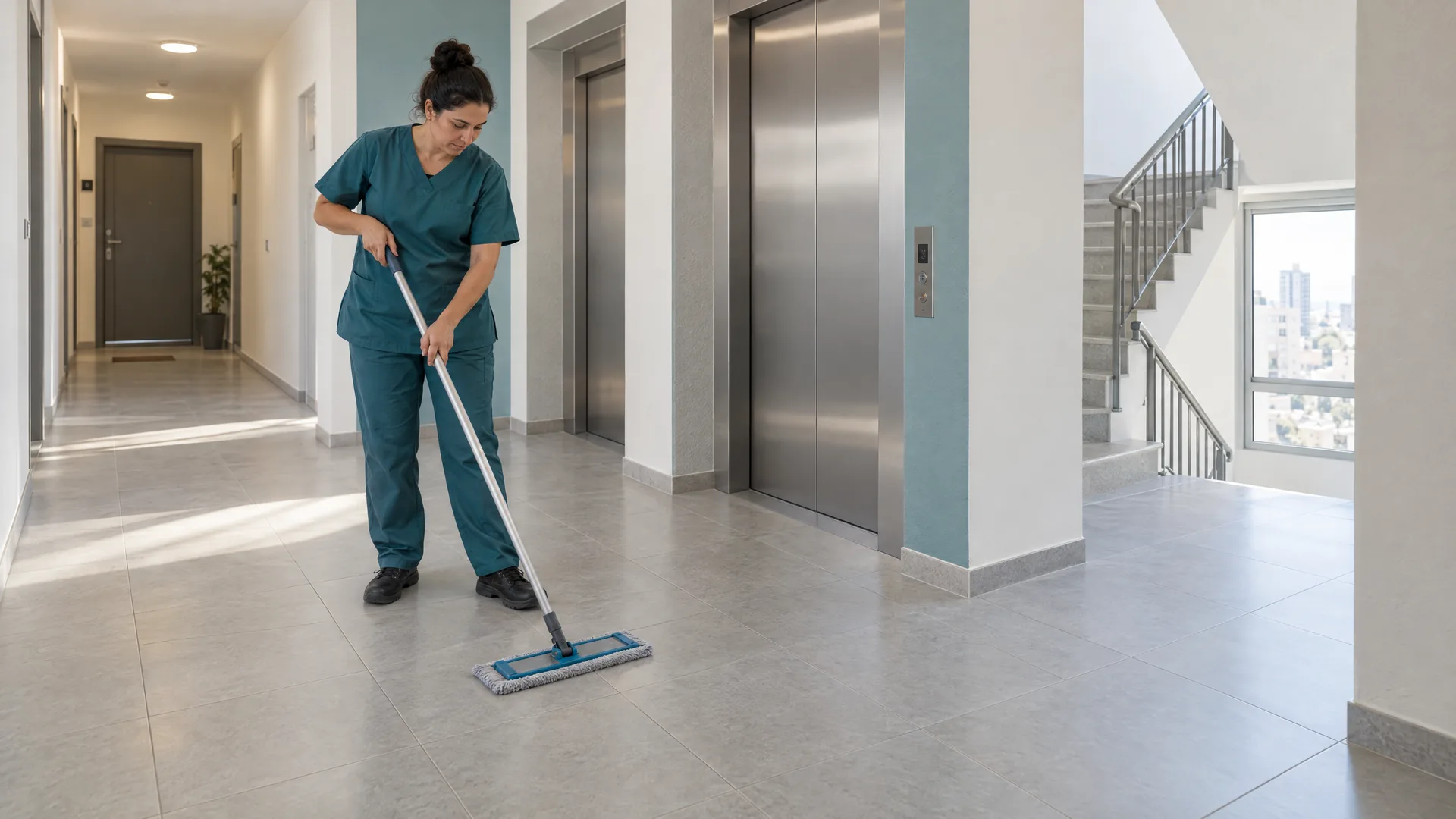
At a glance
- Consistent common-area cleaning improves appearance and everyday use while tackling dirt before it builds up in corners and along walking routes.
- Agree on areas and tasks in advance: the main lobby, floor foyers, stairwells and elevator surfaces each need a different approach.
- Match the schedule to foot traffic, materials and actual conditions, with extra attention after moves or renovation work when needed.
- Routine cleaning is the foundation; disinfection is added when appropriate. Waste-room and parking cleaning are separately scoped complementary services.
Why invest in the spaces everyone uses?
A well-kept lobby, clean stairs and a tidy elevator are part of every resident's journey home. These spaces are more than passageways: people wait for deliveries, move through with strollers and welcome visitors here. Consistent cleaning removes dust, footprints and residue, leaving shared areas more orderly and pleasant to use every day.
For a residents' committee or property management company, a clear plan turns cleaning from a response to complaints into a routine that can be monitored. Agreeing on what is cleaned, when it is done and who checks the result makes missed areas easier to identify and the work easier to adjust. The aim is consistent attention across the building, not just a presentable entrance floor.
Step 1: Define the scope by area and task
A clear scope starts with a short walk-through from the main lobby to the top-floor foyer. Record the materials, touchpoints, places where dirt collects and access to each area. This creates a task list suited to the building rather than relying on the broad term 'cleaning'.
The checklist below is a starting point for discussion, not an automatically included package. For each area, specify the task and frequency: removing floor debris, wiping a handrail or dealing with hand marks, for example. Waste-room cleaning and parking cleaning can complement the plan, but each needs a separate scope, quote and schedule.
- Main lobby: flooring, corners, skirting and agreed accessible surfaces, including entrance-mat care if needed.
- Floor foyers: walking routes, corners near doors and accessible shared surfaces.
- Stairwells: steps, landings and handrails, with routes kept clear.
- Elevators: car floors, mirrors, wall finishes, handrails and accessible button surfaces, following manufacturer instructions.
- Additional agreed details: shared interior doors, mailboxes and other accessible surfaces.
Step 2: Match floor and finish care to the material
Material-specific care helps preserve a surface's appearance over time. Natural stone, porcelain tiles, coated flooring and metal details do not necessarily suit the same product or cleaning method. Before wet cleaning, remove loose dust and grit using a method appropriate for the floor. The Natural Stone Institute explains that sand, dirt and grit can abrade and scratch stone, and recommends frequent removal and suitable entrance mats [2].
For natural stone, choose a cleaner compatible with the stone, typically a suitable neutral stone cleaner, and follow manufacturer directions. Avoid acidic cleaners on marble and limestone because they can damage the finish; abrasive products are not a suitable answer to every mark either [2]. Control water use around finishes, joints and equipment, and mark wet areas until dry. If polishing or refinishing is needed, specify it separately from routine cleaning rather than trying to achieve it with a stronger chemical.
Step 3: Give floor foyers, stairs and elevators their own attention
In a high-rise building, every floor foyer is part of the journey home. Set a systematic cleaning route that covers the agreed floors, floor edges and touchpoints instead of spending most of the available time in the main lobby. In stairwells, include landings and handrails, and organize the work so that routes remain accessible without equipment or water left in the walking path.
Inside an elevator, hand marks on mirrors or finishes and dirt along the floor edges quickly affect the feel of a small space. Clean accessible surfaces according to their materials and the manufacturer's directions. For buttons and screens, follow the electronic equipment's cleaning instructions, as the CDC recommends [1]; do not spray liquid directly into openings or wet components. Work on the mechanism, shaft or an elevator fault belongs to elevator maintenance, not car cleaning.
If cleaning requires a temporary restriction on elevator use, coordinate it with property management and, where necessary, the elevator maintenance provider. Choose a quieter time and notify residents in advance, particularly those who rely on the elevator for access.
Step 4: Build the schedule around traffic, not just floor count
The right frequency follows actual use. A lobby busy with residents, visitors and deliveries may need more frequent attention than a quiet floor foyer. Conditions also change: rainy days bring in wet footprints, while moves and renovation work can add dust and debris beyond the usual load.
Separate tasks completed at each visit from periodic attention to corners, stubborn marks or existing buildup. A thorough one-off clean can establish a starting point for regular maintenance or address a specific event. It does not replace an ongoing plan in a building used every day. Weber State University's floor-maintenance guidance likewise distinguishes scheduled cleaning from refinishing and other specialist treatment arranged as needed [3].
Prioritize frequently touched surfaces. The CDC includes door handles, stair rails and elevator buttons, and recommends considering surface type and traffic when planning cleaning [1]. After an initial working period, review where dirt returns fastest with the building's designated contact and adjust tasks or visit frequency accordingly.
When should disinfection be added to routine cleaning?
Cleaning is the foundation of well-kept shared areas: it removes dirt and residue from surfaces. Disinfection is a separate process that acts on harmful germs remaining after cleaning. The CDC's community-facility guidance says regular cleaning is enough in most situations; additional disinfection is relevant, for example, where someone has obviously been ill and contaminated a surface, or when health authorities recommend it during an outbreak [1]. Build a consistent cleaning routine and add targeted disinfection when there is a reason for it.
When arranging disinfection, identify the surfaces and an appropriate compatible product. Clean first, then follow the label for dilution, contact time and protective equipment. The surface must remain wet for the required contact time, so plan when it can be used again. Provide ventilation as directed and never mix cleaning or disinfecting products [1]. For sensitive finishes or electronics, check the manufacturer's instructions before choosing a product.
Step 5: Coordinate access and prepare the building
A short advance discussion helps the crew work without unnecessary interruptions and residents continue their day with less disruption. Appoint one contact from the residents' committee or property management company, agree on working hours and floor access, and decide who handles questions on site. Notify residents if noise, wet flooring or a temporary access restriction is expected.
Prepare the agreed areas and have residents or the building contact remove personal belongings from them. Record sensitive finishes, old stains and existing damage, and share any available care instructions with the crew. Report recurring leaks or loose finishes to the appropriate maintenance provider so cleaning does not repeatedly have to deal with the same underlying problem.
- Confirm keys or access permissions in advance, and arrange water and electricity if the cleaning method requires them.
- Coordinate around deliveries, moves and active renovation work.
- Keep circulation and exit routes clear, and agree how wet or working areas will be marked.
- Arrange an end-of-job walk-through with the contact or a simple way to report areas needing further attention.
Step 6: Compare quotes by the work you will receive
A useful quote specifies areas, tasks and frequency, not just a price per visit. Two buildings with the same number of floors can require very different work: foyer size, elevator count, flooring materials, soil levels and access all affect the scope. Giving providers the same requirements makes quotes easier to compare and helps you choose a service suited to the building.
Ask how the provider matches products to surfaces, what happens at each visit, which periodic tasks are proposed and how committee requests are handled. Request separate descriptions for routine cleaning, a one-off clean, any disinfection and specialist floor treatment. For an ongoing arrangement, also agree how schedule changes or extra work after a move will be handled. Clear answers and a written task list are more useful than a broad promise that everything will shine.
- Floor count, common-area size and the number of elevator cars.
- Flooring and wall-finish materials, including special manufacturer or supplier instructions.
- Current soil levels and whether an initial thorough clean is needed before routine visits.
- Visit frequency, access hours and the ability to work without blocking essential use.
- Requested extras and separate scopes for a waste room or parking area.
Start with a plan that fits your building
Begin with a short building description and photos of the lobby, a typical floor foyer, the stairs and the elevators. Add the floor count, known surface materials, preferred frequency and the issues you want addressed. This helps establish whether a site visit is needed and define work that responds to actual conditions.
To plan building interior and common-area cleaning with MOLO CLEAN, call or send a WhatsApp message to 0539306139. Share the building details and your committee's or management company's needs so we can agree on the scope and prepare a quote.
Frequently asked questions
How do we decide how often the building needs cleaning?
Consider foot traffic, surface materials and how quickly dirt returns. Busy lobbies and touchpoints may need more frequent attention than quieter areas. Define tasks for each visit and periodic work, then review whether the schedule is suitable after an initial working period.
Does building interior cleaning include every stairwell and elevator?
The quote should define the areas and tasks. Specify which floors, stairwells and elevator cars are covered and what is cleaned in each. Elevator cleaning concerns agreed accessible car surfaces and touchpoints; work on the mechanism or shaft is separate elevator maintenance.
Should the lobby be disinfected at every visit?
Not necessarily. Regular cleaning is the foundation, and the CDC says it is sufficient in most situations in community facilities. Add disinfection for a defined need, such as surface contamination by someone who has been ill or a health-authority recommendation, using a compatible product according to its label [1].
Are waste-room and parking cleaning included in common-area cleaning?
Not automatically. Waste-room cleaning and disinfection and parking cleaning are complementary services with separate scopes and coordination. If you want to combine them, request separate details in the quote so the areas and tasks covered by each service are clear.
Sources and further reading
External sources may be available in English only.