
At a glance
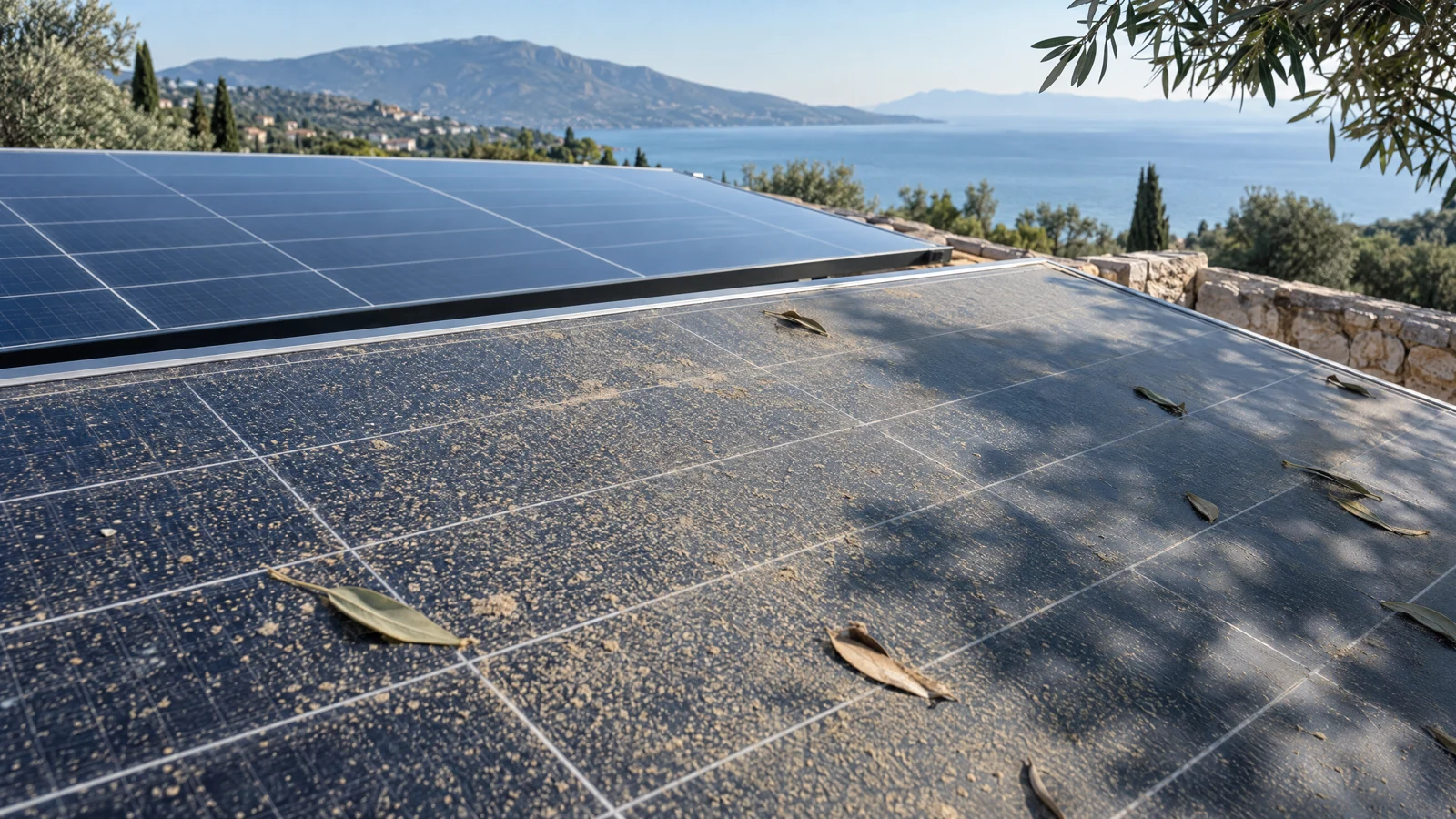
- Cleaning removes dust and deposits from panel glass, helping more light reach the cells and potentially reducing soiling-related production losses.
- When householders use some of the electricity their system generates, maintaining production may help lower electricity bills; the benefit depends on the system and usage patterns.
- Compare output across similar periods or with a forecast that accounts for irradiance and temperature to assess unusual changes.
- MOLO CLEAN cleans solar panels; electrical inspections, fault diagnosis and repairs should be handled by an installer or qualified professional.
Cleaning helps protect your system's electricity production
Dust and deposits on panel glass interfere with sunlight reaching the cells. Appropriate cleaning removes this material and may reduce production losses caused by soiling. If your household uses some of the electricity the system generates, maintaining production may help lower your electricity bill; the benefit depends on how much the system produces and when that electricity is used.
An IEA PVPS report published in January 2023 describes soiling as one of the significant yield-loss factors in PV systems after irradiance, and notes that its impact varies greatly between sites and even across parts of a single array. The report's global figures provide context for why soiling matters, but are not a forecast for a particular rooftop in Israel [1].
How soiling, shade and heat affect solar panels
Soiling is material on the glass: dust, soot, leaves, bird droppings or residue. It may be visible from the ground or through visual monitoring. Deposits can also build up unevenly, so appearance alone does not measure production, and a small patch is not necessarily insignificant to system performance [3].
Shade occurs when a tree, building, antenna or another object blocks sunlight from a panel or part of it. Shadows can move during the day and across seasons; cleaning will not remove them. Do not climb onto a roof to inspect panels or clear an obstruction. For work at height or changes to the site, contact an appropriate professional.
Temperature matters too: hot solar cells may produce less power than under reference conditions, even when the surface is clean and unshaded. A bright, hot summer day therefore does not always deliver more output than a cooler, sunny day. Weather, irradiance and module temperature change together and affect comparisons [2].
How to check whether your system's output has changed
Monitoring data can help you decide whether to check the system or arrange cleaning. Start with data from the same system: see whether the decline is gradual or sudden, whether it persists, and whether the inverter shows alerts. Compare similar days or periods where possible, accounting for season, cloud cover, irradiance and temperature. Comparing monthly kWh totals alone is not enough because daylight hours, weather and downtime may differ.
A more accurate approach compares measured output with expected or modelled output under matching irradiance and temperature conditions. The U.S. Department of Energy's 2021 report analyzed 75 federal systems using corresponding production, irradiance and temperature data; it also distinguishes system availability from performance while operating [2]. The sample is not a recommended benchmark for an Israeli home; it illustrates weather-adjusted comparison.
If the drop is sudden or persistent, alerts appear, or the data do not fit the weather conditions, contact the system installer or a qualified professional for inspection. Cleaning addresses external dirt; electrical inspection, inverter diagnosis and wiring repair require an appropriate professional.
When to clean solar panels
Cleaning may help when dirt has accumulated on the panels and access is safe and properly arranged. The need depends on the site and local conditions, so one fixed schedule does not suit every roof. A 2021 scientific review explains that soiling varies with location, season, weather and deposit type; tailoring the approach to these conditions helps determine when cleaning is appropriate [3].
The practical benefit depends on accumulated dirt, weather, shade and the system's condition. Do not climb onto a roof, touch cables or use abrasive materials. When panels are hot, avoid cleaning in a way that could cause a sudden temperature change; arrange work through a suitable cleaning service with safe access.
Solar panel cleaning by MOLO CLEAN
MOLO CLEAN provides solar panel cleaning. The owner has more than eight years of experience in the field. Professional cleaning removes dust and deposits, helping keep panel surfaces clean and support the system's electricity production. The service covers cleaning only, not system installation, electrical testing, fault diagnosis or repairs. For technical work, contact the installer or a qualified solar professional.
Want to find out whether cleaning suits your system? Call MOLO CLEAN at 053-930-6139 or message on WhatsApp at 972-53-930-6139 to discuss access conditions and request a project quote.
Frequently asked questions
How can solar panel cleaning help a system?
Cleaning removes dust and deposits from the glass, reducing the material that interferes with sunlight reaching the cells. It may reduce production losses caused by soiling. If your household uses some of the electricity generated, maintaining production may help lower the bill, depending on system conditions and usage patterns.
How often should solar panels be cleaned?
There is no single schedule for every system. The need depends on location, season, weather and the type of deposits. Consider the panel condition and monitoring data, and choose a time that suits the site and allows safe access.
How should I compare solar production between months?
Prefer expected output or a model that accounts for irradiance and temperature over the same period, or compare periods with similar conditions. Monthly kWh alone cannot distinguish different weather, shade or downtime.
Who should inspect a sharp production drop or inverter alert?
Contact the system installer or a qualified solar and electrical professional. MOLO CLEAN provides panel cleaning only and does not install systems, diagnose faults or repair electrical components.
Sources and further reading
External sources may be available in English only.